
The Roncesvalles to Zubiri Camino is the second stage of the famous Camino Francés, a pilgrimage route steeped in history and spiritual significance. This stage, which covers about 21-22 kilometers (13-14 miles), takes pilgrims from the historic village of Roncesvalles to the charming town of Zubiri. With rolling hills, picturesque landscapes, and a variety of historical landmarks, this section of the Camino offers both physical challenges and rewarding experiences for every pilgrim.
After a well-earned rest in Roncesvalles, your journey on the Roncesvalles to Zubiri Camino begins. Roncesvalles is a renowned stopping point for pilgrims, offering historic accommodations and a serene atmosphere. As you step out of Roncesvalles, look for the familiar yellow arrows that guide pilgrims on their way to Santiago de Compostela. The route takes you through beautiful forests, pastures, and fields of Basque Navarra, where the landscape seems to come alive with every step.
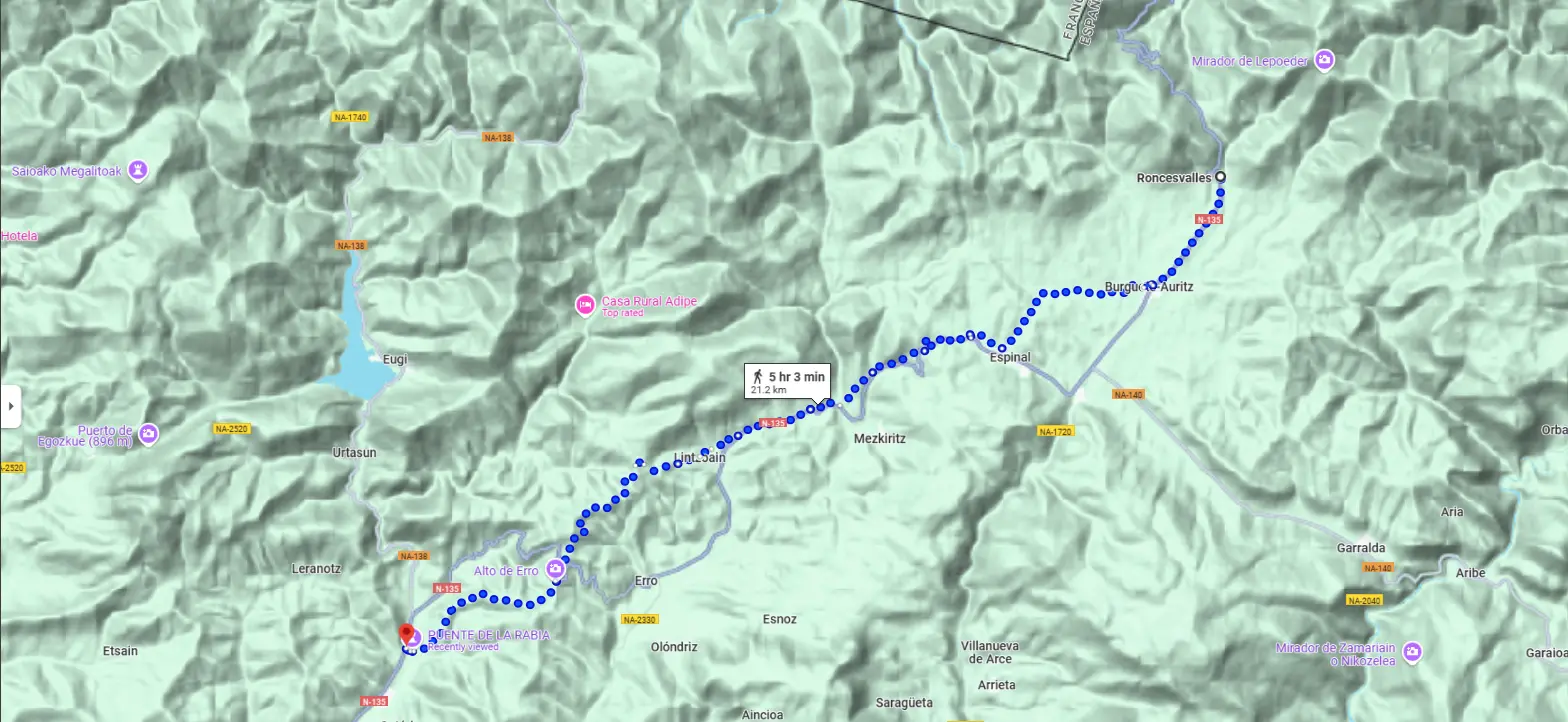
Your first stop along the Roncesvalles to Zubiri Camino is the village of Burguete. Located just 3 kilometers from Roncesvalles, Burguete has long been a favorite rest stop for pilgrims. Ernest Hemingway famously stayed here during the 1920s, drawing inspiration for his novel The Sun Also Rises. The village offers basic services like cafés, a mini-market, and a beautiful church dedicated to San Nicolás de Bari. After a short break, the path leads you to the village of Espinal, a quiet Basque settlement known for its vibrant green-painted woodwork and red geraniums. It’s an ideal place to recharge and enjoy some local tapas before continuing your journey.
As you progress along the Roncesvalles to Zubiri Camino, the path takes you to the challenging ascents of Alto de Mezquiriz and Alto del Erro. These hills provide rewarding views of the surrounding valleys but require some physical effort. The climb to Alto de Mezquiriz is moderate, but the Alto del Erro is more demanding, with steep slopes and a mix of terrain. While it can be taxing, the beauty of the forests surrounding you and the vast views from the top make the effort worthwhile. Don’t forget to pause along the way, hydrate, and take in the majestic Basque countryside.
The descent towards Zubiri, the end of the Roncesvalles to Zubiri Camino stage, is marked by varying opinions on difficulty. Some pilgrims find the downhill stretch challenging due to uneven gravel paths, loose rocks, and worn stones. In wet conditions, it can be slippery and muddy, requiring extra care. However, with the right footwear, trekking poles, and attention to footing, the descent is manageable. As you make your way down, you’ll pass through lush forests and meadows, with the sounds of the Río Arga accompanying you on your journey.
Zubiri, meaning “Town of the Bridge,” is the destination at the end of the Roncesvalles to Zubiri Camino. Upon entering the village, you’ll cross the famous Puente de la Rabia, a medieval bridge with historical significance. According to local legend, animals that pass under the bridge are cured of rabies. The peaceful atmosphere of Zubiri is a welcome sight after a day of walking, and the village offers plenty of options for pilgrims looking for a place to rest. There are albergues, hotels, and guesthouses to accommodate travelers. Be sure to book your stay in advance, especially during peak times when pilgrim traffic is high.
Walking the Roncesvalles to Zubiri Camino is not just a physical journey, but a spiritual and cultural experience. As you walk, you’ll encounter remnants of the past, including Romanesque churches, medieval bridges, and quaint villages that speak to centuries of pilgrim history. The sense of community on the Camino is palpable, as pilgrims from all over the world share the same goal of reaching Santiago de Compostela. Greeting each other with a “Buen Camino” is a common practice, creating a bond that transcends language and nationality.
To make the most of your journey along the Roncesvalles to Zubiri Camino, consider the following tips:
Footwear: Ensure you have sturdy, comfortable shoes that provide good support. The varied terrain requires proper grip, especially when descending.
Weather: Be prepared for changing weather conditions. Pack a lightweight rain jacket and layers for comfort.
Snacks and Water: Carry enough water and energy snacks to sustain you, as some services may be closed along the route, especially during off-hours or holidays.
Pacing: Take breaks to rest and hydrate. The path includes both uphill and downhill stretches, so it’s important to manage your energy throughout the day.
Completing the Roncesvalles to Zubiri Camino stage brings you one step closer to Santiago de Compostela. The stage offers a mix of challenges and rewards, with beautiful landscapes, historic landmarks, and a sense of camaraderie with fellow pilgrims. Whether you are walking for spiritual growth, personal achievement, or simply to experience the culture and history of the Camino, this stage will be a memorable part of your journey.
Buen Camino!