Preparing for the Camino de Santiago: Successful Tips
This briefing document synthesizes information regarding the Camino de Santiago pilgrimage, focusing on preparation, gear, motivation, and related business opportunities. The Camino is a popular network of pilgrimage routes leading to the Cathedral of Santiago de Compostela in Galicia, Spain. Whether you’re walking for spiritual reasons, personal growth, or physical challenge, preparing for the Camino de Santiago is essential to ensure a rewarding and transformative experience.
I. The Camino de Santiago: Routes, Terrain, and Experience
Multiple Routes: Choose Your Camino Path
While the Camino Frances from Saint-Jean-Pied-de-Port is the most iconic and spans nearly 800 kilometers, it is not the only route. Other popular options include the Camino Portuguese and Camino Ingles. There is no “right” or “wrong” way to walk the Camino, and pilgrims can start from various locations depending on their fitness level and time constraints. When preparing for the Camino de Santiago, consider which route suits your preferences.
Non-Technical Terrain: Accessibility for All Pilgrims
The majority of Camino routes are non-technical, consisting of asphalt, concrete, dirt roads, and single-track paths. There is no requirement for scrambling, off-trail hiking, or climbing. This makes the Camino de Santiago accessible to a wide range of individuals, but physical preparation is still key when preparing for the Camino de Santiago.
Varied Seasons: Weather and the Camino Experience
The Camino experience can be significantly impacted by the seasons. Summer months bring warmth, while winter is wetter, though rain can be expected year-round. Being prepared for the weather is an essential aspect of preparing for the Camino de Santiago. Packing versatile clothing, including rain gear and quick-drying options, is vital for success.
Daily Distances: Plan for Comfortable Walking
Most pilgrims cover 10-20 miles (approximately 16-32 kilometers) per day. Daily walking distances should be considered when preparing for the Camino de Santiago. Comfort in footwear and stamina training are crucial to avoid blisters and fatigue.
Physical and Mental Challenge: The Camino as a Journey
Walking the Camino de Santiago is both a physical and mental undertaking. While some may view it as an “easy stroll,” covering hundreds of kilometers presents challenges like fatigue, blisters, and minor injuries. Proper preparation, both physical and mental, is key to embracing the journey ahead.
Community and Belonging: The Camino Spirit
The Camino fosters a strong sense of community among pilgrims who meet in villages and towns, sharing food, drinks, and stories. There is an etiquette of openness, friendliness, and respect for the questions each person is carrying. This sense of belonging is one of the most rewarding aspects of preparing for the Camino de Santiago.
II. Preparation for the Camino
Physical Training: Build Endurance and Stamina
Adequate physical preparation is paramount for a successful pilgrimage. The “Zero to Hero program” suggests starting with short walks (5 km/3.1 mi, 3 times a week) and gradually increasing the distance and incorporating hills. Training in the shoes you intend to use on the Camino is crucial to avoid blisters. Preparing for the Camino de Santiago involves focusing on training that builds strength and prepares your body for long, consecutive days of walking.
Packing Light: Less Is More
The weight of your pack significantly impacts comfort and enjoyment. Aim for a pack weight of less than 10% of your body weight. Hiking with a lighter pack will make your trail experience much more comfortable and enjoyable. Preparing for the Camino de Santiago involves packing only the essentials and keeping your gear minimal.
Essential Gear for Your Camino Journey
When preparing for the Camino de Santiago, investing in the right gear is essential. Key gear includes:
-
Footwear: The most important gear decision. Trail running shoes are often recommended over heavy boots due to their lighter weight and comfort. Choose shoes that are breathable, provide forefoot protection, and have a secure fit.
-
Socks: Merino wool hiking socks are highly recommended for long-distance walking. They are durable, moisture-wicking, and comfortable.
-
Backpack: A 35-40L backpack is generally sufficient for carrying necessary items. Training with the same backpack you intend to use on the Camino is advisable for a more realistic experience.
-
Clothing: Layers are important for temperature control. Pack quick-drying clothing, rain gear, and versatile items like convertible pants for flexibility.
-
Other Essentials: Blister kits, toiletries (in small quantities), a quick-dry towel, a headlamp or torch, earplugs (due to snoring in shared accommodation), a journal, guidebook, and important documents like your passport and credit cards.
While gear is important, nothing trumps training and fitness. The most significant factors in successfully completing the Camino are your physical and mental preparation.
Foot Care: Be Prepared for Blisters
When preparing for the Camino de Santiago, be prepared for blisters. Learn how to treat them and invest in a blister kit with Moleskin, Compeed, and bandages. Proper foot care will prevent minor issues from becoming major setbacks.
III. Motivation and Personal Transformation
Varied Reasons for Walking the Camino
People walk the Camino de Santiago for a variety of reasons:
-
Religious reasons
-
Seeking purpose in life
-
Physical challenge
-
Cultural discovery
-
Recovery from personal events
-
Disconnection from modern life
-
Meeting people
-
To prove physical capability
-
As a healthy break or to renew appreciation for life
Understanding your motivation is key when preparing for the Camino de Santiago, as it will fuel you through the tough days.
Life-Changing Experience
The Camino de Santiago is frequently described as a transformative experience that can lead to significant life changes. Many pilgrims report a deeper sense of spirituality and a renewed perspective on life. Preparing for the Camino de Santiago mentally is just as important as physical preparation.
Focus on the Journey: The Camino as a Personal Quest
For many, the realization emerges that “what mattered was the journey,” and that the Camino de Santiago provides a unique opportunity to focus on community, belonging, and personal growth.
IV. Business and Marketing Considerations (Relevant to Businesses Targeting the Camino Audience)
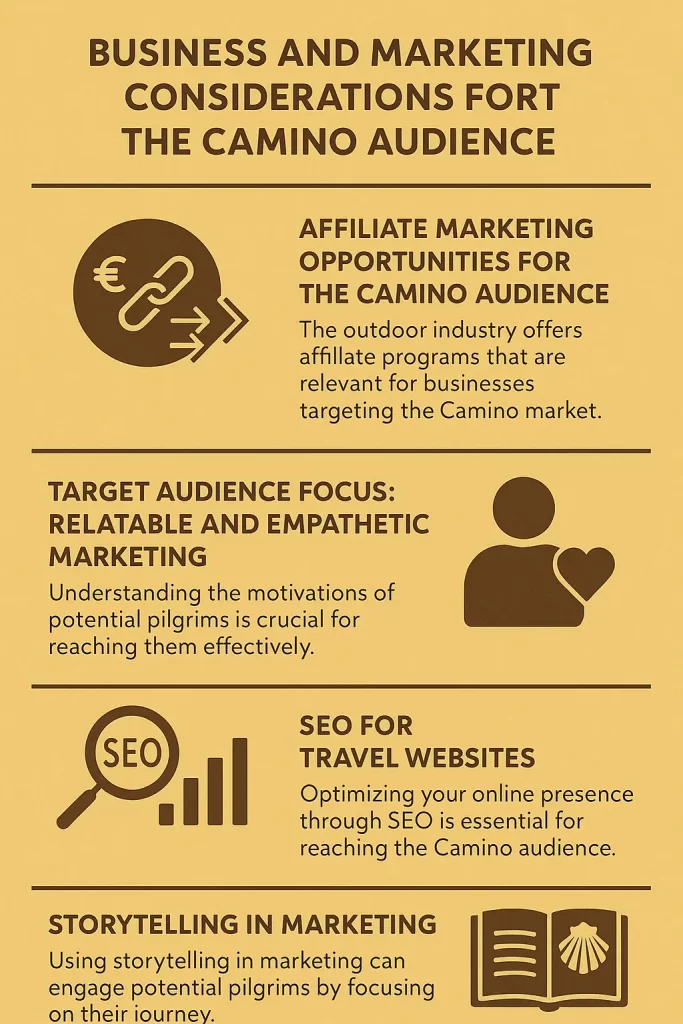
Affiliate Marketing Opportunities for the Camino Audience
The outdoor industry offers affiliate programs that are relevant for businesses targeting the Camino market. Companies like REI, Patagonia, and North Face offer affiliate programs for hiking gear, which are highly relevant for pilgrims preparing for the Camino.
Target Audience Focus: Relatable and Empathetic Marketing
When marketing to potential pilgrims, it’s crucial to focus on their needs and desires. Understanding their motivations and offering relatable, empathetic language can help businesses reach their target audience more effectively.
SEO for Travel Websites
Optimizing your online presence through SEO is essential for reaching the Camino audience. Strategic keyword implementation, website audits, and content optimization will help businesses rank higher in search engines when pilgrims search for information about preparing for the Camino de Santiago.
Storytelling in Marketing
Using storytelling in marketing can engage potential pilgrims by focusing on their journey. A well-crafted story that connects emotionally with the target audience will enhance the overall experience and help businesses stand out in the Camino de Santiago market.