Camino Packing Tips: Keep Your Backpack Light and Comfortable
The Camino de Santiago, a network of ancient pilgrimage routes stretching across Europe, offers a journey of profound self-discovery, spiritual introspection, and physical challenge. Whether you embark for personal fulfillment, health, or a connection with nature, adequate preparation is paramount for a memorable, fulfilling, and amazing experience. One of the most crucial aspects of this preparation, often underestimated by first-time pilgrims, is Camino packing tips and keeping your backpack light. Your backpack is your constant companion, and its weight can significantly influence your comfort, endurance, and overall enjoyment of the Way.
The Golden Rule: Less is Truly More
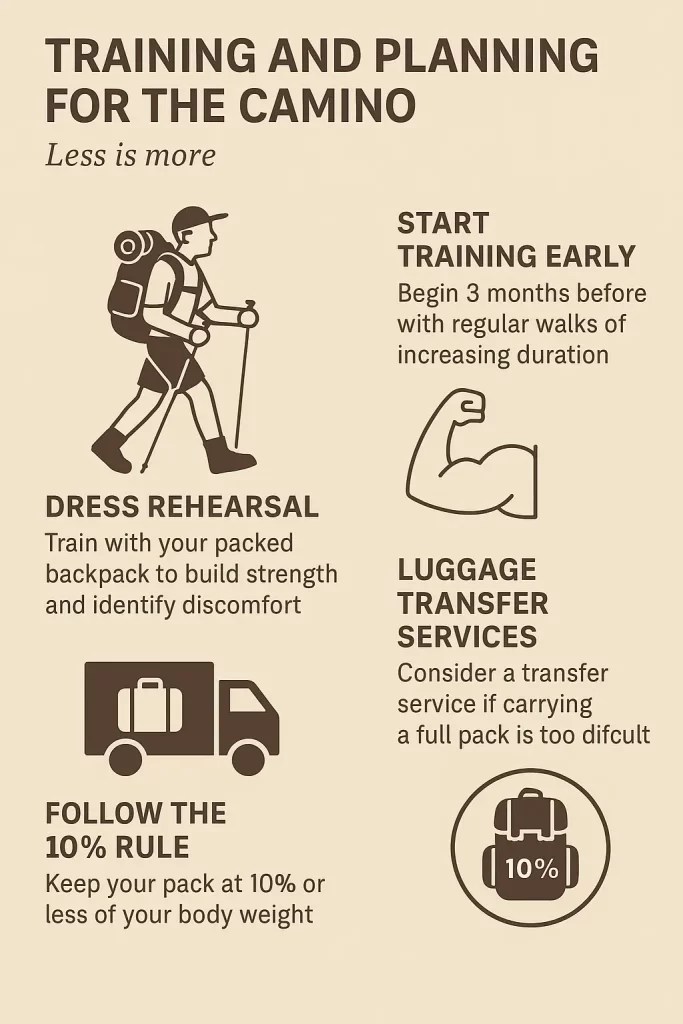
The mantra for Camino packing tips is simple: aim to carry no more than 10% of your body weight. This isn’t just a suggestion; it’s a golden rule for preventing unnecessary strain and enjoying your journey. Carrying too much weight can lead to sore knees, discomfort, and potentially even injury, which could prematurely end your pilgrimage. Many experienced pilgrims attest that the lighter your rucksack, the more enjoyable the journey becomes. Keeping the Camino packing tips in mind will make a significant difference.
Choosing the Right Backpack for the Camino
Essential Features of a Good Backpack
When it comes to Camino packing tips, choosing a good quality, comfortable, and lightweight backpack is paramount, as it’s one of the two most important items you’ll use daily. Your pack should fit you properly, ideally featuring hip and chest straps to distribute weight evenly and comfortably. For most pilgrims, a 30-40 liter backpack should suffice. If your belongings don’t fit, it’s a clear sign you’re packing too much. In your Camino packing tips, remember to select a pack that will distribute the weight evenly.
Popular Backpack Brands
It’s highly recommended to visit a local outdoors shop to get properly fitted and try on various packs. When trying them on, wear the clothes you intend to walk in and ask the shop assistants to add weight to the pack to simulate real-world conditions. Popular brands like Osprey (e.g., Talon 33, Tempest 40L), Gregory, Deuter, Lowe, Decathlon, and North Face are often favored by pilgrims. Additionally, ensure your pack is waterproof or comes with a reliable rain cover, as you’ll encounter unpredictable weather, especially in regions like Galicia. Following the best Camino packing tips ensures a comfortable and safe journey.
The Foundation of Your Journey: Footwear
Break in Your Shoes Early
This cannot be stressed enough: do not start the Camino with fresh, new shoes. New shoes are a primary cause of blisters and pain, which can severely impact or even halt your pilgrimage. Break in the exact shoes you plan to wear on the Camino de Santiago by training extensively in them. Using the best Camino packing tips can help avoid issues like blisters by ensuring you’re wearing broken-in footwear.
Types of Footwear: Hiking Shoes vs. Boots
While some experienced hikers prefer heavy boots, they are generally not necessary for the Camino. Instead, light hiking shoes or trail runners are excellent choices, as they help prevent blisters and offer sufficient support. When purchasing shoes, do so at the end of the day when your feet are at their widest, and go a size up from your usual shoe size, as feet swell significantly during long days of walking. These Camino packing tips will save you from unnecessary foot problems.
Sock Selection
Beyond shoes, invest in good quality socks, such as Merino wool, and carry at least three pairs, changing them frequently to prevent blisters. Promptly treat any hot spots or blisters with plasters or bandages, and consider using a good foot cream at the end of each day. While some pilgrims choose waterproof shoes, it’s noted that feet will likely get wet anyway, so focus on quick-drying options and always carry spare dry socks. Don’t compromise on shoe quality; they are crucial for getting you to Santiago. These Camino packing tips are crucial for preventing painful issues.
It’s also wise to carry a second pair of lightweight shoes or sandals for evenings, to give your feet a much-needed break from your walking shoes.
Clothing: Smart Layers and Quick Drying
Choosing the Right Fabrics for the Camino
Camino packing tips mean choosing versatile clothing suitable for varied weather conditions. The weather along the Camino can change significantly, from warm temperatures to rain and even snow in certain months or regions. Technical fabrics are highly recommended, as they wick moisture, dry quickly, and keep you comfortable in varying temperatures. Avoid cotton, as it retains moisture.
How Much Clothing to Bring
-
Quantity: Three complete changes of clothes are generally sufficient, with an extra pair of socks. Four changes are often too many, leading to carrying unnecessary weight. Use the Camino packing tips to help minimize what you pack.
Rain Gear
Rain gear is essential, such as a ripstop poncho or a good quality rain jacket. Some pilgrims even test their rain gear in the shower before leaving to ensure it doesn’t leak. Camino packing tips will help you select gear that will keep you dry and comfortable in various weather conditions.
Layering Your Clothes
-
Layers are key: Pack items like a fleece for cold mornings or evenings, convertible pants (that zip off to become shorts), long-sleeve shirts for chilly weather, and t-shirts.
-
Consider a neck scarf or bandana for sun protection and a lightweight bathing suit if you plan to swim. Have something appropriate for wearing in churches.
Beyond Clothes & Shoes: Essential Extras (and What to Leave Behind)
Toiletries
Keep them very light, as you can easily buy more along the Way. Include essentials like sunscreen (a must!), lip balm, toothpaste, floss, and deodorant. Consider a small Ziploc bag of powdered laundry detergent and clothes pins for handwashing.
First Aid/Foot Care
A blister kit with Moleskin, Compeed (which you can buy in Spain), and bandages is crucial. A needle and thread for blister draining is also suggested.
Small Tools and Navigation
A Swiss army knife is a handy item. Also, bring your mobile phone and charger, and consider downloading useful Camino apps like Wise Pilgrim, Gronze, Camino 360, Camino Assist, or Camino Ninja. WhatsApp is also highly recommended for communication with hostels and fellow pilgrims. A headlamp can be useful for early morning starts in the dark.
Comfort & Security
Earplugs are highly recommended for communal dorms due to snoring pilgrims. A quick-dry lightweight travel towel is also useful. For security, keep your passport, money, credit cards, and pilgrim passport close, preferably in shirt or pants pockets, and don’t keep all cash in one place. Label your walking poles and shoes at night to prevent accidental mix-ups.
Documentation
Your pilgrim passport (credencial) is essential for staying in pilgrim-specific accommodations. Guidebooks (like John Brierley’s or Michelin Guides) and a journal to capture your thoughts are also recommended.
Hydration
Carry a refillable water bottle or bladder and drink plenty of water, as there are many fountains along the Camino. Electrolytes can also be beneficial, though finding good quality ones may be challenging along the route.
What to leave behind: Avoid bringing unnecessary important papers in your wallet. Laptops or tablets are generally not advised unless you’re prepared to carry them daily; consider taking a break from technology.
The “Dress Rehearsal”: Training with Your Pack
To truly prepare for the Camino, incorporate a “dress rehearsal” into your training. This means not only walking to build endurance and strength but also training with a day pack filled with the essentials you’ll carry daily. This helps your body get accustomed to carrying the weight, identifies any discomfort spots, and allows you to practice managing your food and water intake on the go. It’s recommended to start your Camino training at least three months in advance, with consistent 1-hour sessions weekly and longer weekend walks closer to your trip.
When Light Isn’t Light Enough: Luggage Transfer Services
For those who find carrying their full pack too challenging, or simply prefer to walk unencumbered, luggage delivery services are available on all major Camino routes. Companies like Jacotrans, CaminoFacil, TuiTrans, and even the Spanish Post Office will collect and deliver your bags from one accommodation to the next. This service typically costs between 7-9 Euros per backpack per stage, with bags usually weighing no more than 20kg.
While convenient, it’s important to note that many public albergues do not allow luggage delivery, meaning you might need to opt for private albergues or hotels if you use this service consistently. On less popular routes, finding this service might be difficult, though local taxis could assist at a higher cost.
Final Thoughts
The Camino de Santiago is a transformative experience that rewards preparation and an open mind. By packing for the Camino smartly, focusing on essential, lightweight, and versatile gear, and adhering to the “10% rule,” you can significantly enhance your physical comfort and mental readiness for the journey ahead. Remember to test all your gear before you leave, including your packed backpack, to ensure everything is functional and comfortable.
Buen Camino!