Inspiring Camino de Santiago Statistics: Who’s Walking the Path?
The Camino de Santiago, a journey of profound self-discovery and physical challenge, has become one of the most iconic pilgrimage routes in the world. Recent statistics from 2023 and 2024 highlight not only the increasing number of pilgrims but also the growing diversity in the people who choose to walk the Camino. This Camino de Santiago statistics overview explores the key trends, motivations, and demographic shifts shaping this pilgrimage experience.
Demographics: Understanding Who Walks the Camino
The Camino de Santiago attracts a wide variety of pilgrims, from different ages, genders, and nationalities. The Camino de Santiago statistics from recent years provide a clearer picture of the growing diversity:
Age Demographics
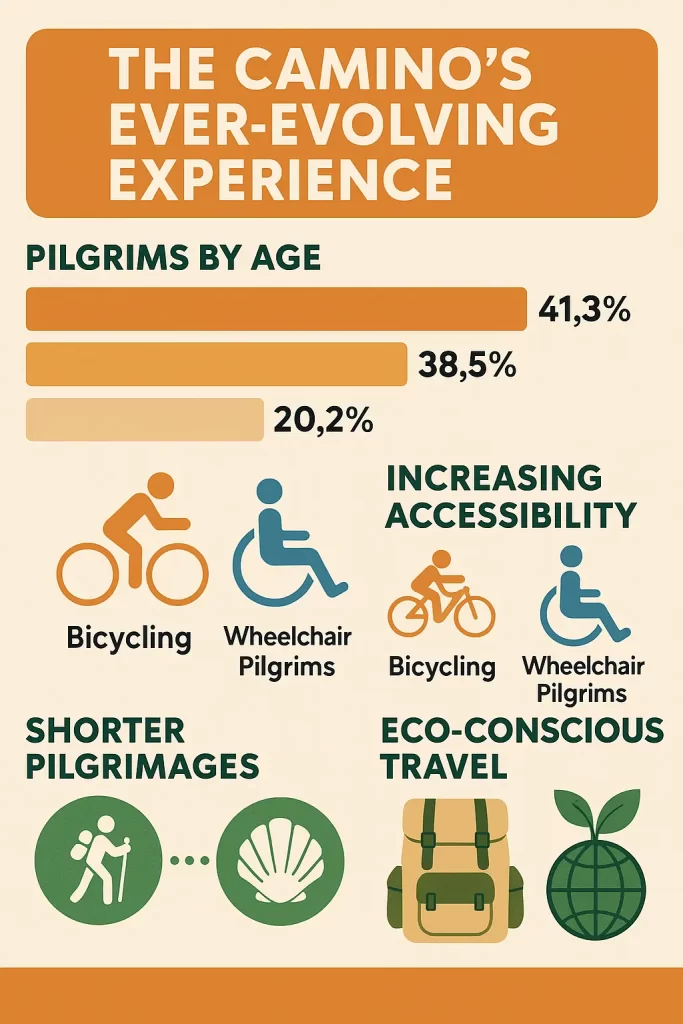
In 2023, the largest group of pilgrims was between the ages of 46 to 65, making up 41% of all participants. This trend continued in 2024, where the 46-65 age group was still the largest, comprising 41.3% of pilgrims. Meanwhile, the 18-45 age group accounted for 39.5% in 2023, and slightly decreased to 38.5% in 2024. The number of pilgrims aged 65 and older increased, with 53,753 pilgrims in 2024, showing that age is no barrier to embarking on the Camino.
Gender Representation
Women have made up the majority of pilgrims in recent years. In 2024, women represented 53.86% of all pilgrims, with 245,676 women walking the Camino, compared to 210,421 men. This growing trend of female participation in the Camino de Santiago statistics is significant, as it highlights the Camino as an inclusive and empowering journey for all, especially solo female travelers. The higher percentage of women, particularly in countries like the U.S., shows that the Camino provides a safe and welcoming environment for female pilgrims.
Nationality Breakdown
The Camino de Santiago is an international pilgrimage, with pilgrims coming from almost 200 countries worldwide. In 2024, Spain had the highest number of pilgrims, accounting for 42% (208,378 pilgrims). The United States came second with 38,052 pilgrims, followed by Italy, Germany, Portugal, and France. Pilgrims from other countries like South Korea, Mexico, Canada, Australia, Poland, and Brazil are also increasingly represented. According to Camino de Santiago statistics, American pilgrims represented a growing international presence, with the U.S. consistently ranking among the top countries for Camino participation.
Motivations: Why Do People Walk the Camino?
While religious motivations are still significant, many pilgrims embark on the Camino de Santiago for reasons beyond spirituality. The Camino de Santiago statistics indicate that people walk for a wide variety of personal, spiritual, and cultural reasons:
Religious and Secular Motivations
In 2023, 42% of pilgrims cited religious reasons for walking the Camino, while 34.7% combined religious and secular motivations, and 23% walked for purely non-religious reasons. In 2024, the religious motivation remained high, with 215,974 pilgrims identifying religious reasons for their pilgrimage. However, the non-religious reasons, such as personal growth, cultural exploration, and adventure, continue to grow, reflecting a more secular trend on the Camino.
Spiritual and Physical Challenges
Pilgrims who are not religious still find deep personal meaning in the Camino. For many, walking the Camino is about spiritual reflection, meditation, and inner peace. Others walk to challenge themselves physically or to overcome personal crises like heartbreak, grief, or loss. These motivations are becoming increasingly significant in Camino de Santiago statistics, especially during the post-pandemic years, where many pilgrims sought healing or new perspectives.
Routes: The Camino Experience and Changing Trends
The Camino de Santiago offers a variety of routes, each with its unique experience. While the Camino Francés remains the most popular, other routes are gaining significant traction. Here’s how the Camino de Santiago statistics have shaped the landscape of different routes:
Camino Francés: The Most Popular Route
The Camino Francés (French Way) remains the most popular route, attracting nearly 47.4% of all pilgrims in 2024, with 236,378 pilgrims completing the route. Its popularity is attributed to its rich history, scenic beauty, and ease of accessibility. The Camino Francés is also the most well-equipped route, making it easier for pilgrims to find accommodation and services along the way.
Camino Portugués and Coastal Route
The Camino Portugués (Portuguese Way) has seen significant growth in recent years. In 2024, it was the second most popular route, with 95,453 pilgrims. The Camino Portugués Coastal Route was also highly popular, with 74,758 pilgrims walking this beautiful, sea-hugging stretch. This route’s appeal lies in its flatter terrain and stunning coastal views.
Other Popular Routes
In 2024, the Camino Inglés, Camino Primitivo, Camino del Norte, and Vía de la Plata routes saw increases in pilgrim numbers. Though the Vía de la Plata remains the least popular of these routes, it has nonetheless attracted a steady stream of pilgrims seeking a quieter, less-traveled Camino experience.
Starting Points and Pilgrimage Flexibility
Most pilgrims start their journey in Sarria, Spain, due to its proximity to the last 100 km required to receive a Compostela certificate. In 2024, 151,091 pilgrims began their pilgrimage from Sarria. Other popular starting points include Porto and Tui on the Camino Portugués. Pilgrims can start from over 200 different locations, allowing for a highly personalized Camino experience.
Trends in the Camino de Santiago Pilgrimage
The Camino de Santiago statistics also highlight emerging trends in how pilgrims are choosing to experience the journey:
Bicycling and Wheelchair Pilgrims
A growing trend in the Camino de Santiago statistics is the rise of “bicygrims”—pilgrims who cycle the Camino instead of walking. In 2024, 20,776 pilgrims completed the Camino by bike. Additionally, wheelchair pilgrims have increased, with 270 completing the journey in 2024. These trends indicate that the Camino is becoming more inclusive, allowing people with varying abilities and preferences to experience this iconic pilgrimage.
Shorter Pilgrimages and Eco-Conscious Travel
Shorter pilgrimages, such as walking the last 100 km of the Camino, are becoming increasingly popular, as people seek a more manageable and time-efficient journey. Additionally, eco-conscious travel is a growing trend, with many pilgrims seeking to minimize their environmental impact by using sustainable gear and following green practices during their journey.
Final Thoughts: The Camino’s Ever-Evolving Experience
The Camino de Santiago continues to evolve, with new trends, motivations, and demographics shaping the pilgrimage experience. The Camino de Santiago statistics demonstrate how diverse and inclusive the Camino has become, welcoming pilgrims of all ages, genders, and backgrounds. Whether walking for religious, spiritual, or personal reasons, the Camino remains one of the most meaningful and transformative journeys in the world.
Buen Camino!