Essential Camino Foot Care Tips: Prevent and Treat Blisters
The Camino de Santiago, a journey of profound self-discovery and physical challenge, often rewards pilgrims with breathtaking vistas and life-changing moments. However, to truly embrace this experience, one must master the Camino foot care tips. Neglecting your feet can lead to discomfort, pain, and, most commonly, blisters, which can significantly impact or even halt your pilgrimage. Your feet are your most vital tool on the Way, and keeping them healthy is paramount for a memorable, fulfilling, and amazing experience.
Prevention: The First Step to Happy Feet
The best way to deal with blisters is to prevent them from forming in the first place. This requires diligent preparation and smart choices before and during your pilgrimage. Below are some essential Camino foot care tips to keep your feet in top condition:
Break in Your Shoes: A Crucial Step
This cannot be stressed enough: do not start the Camino with fresh, new shoes. New shoes are a primary cause of blisters and pain. You must break in the exact shoes you plan to wear on the Camino by training extensively in them. This process attunes your feet to your footwear, making them more comfortable for the long journey ahead.
Choose the Right Footwear for the Camino
While some experienced hikers might prefer heavy boots, they are generally not necessary for the Camino. Instead, light hiking shoes or trail runners are excellent choices, as they help prevent blisters and offer sufficient support. When purchasing shoes, do so at the end of the day when your feet are at their widest. Crucially, go a size up from your usual shoe size, as feet swell significantly during long days of walking. A small shoe will result in blisters, and a blister can stop a Camino. Don’t compromise on shoe quality; they are crucial for getting you to Santiago. These Camino foot care tips will ensure that your footwear is perfect for your journey.
Invest in Good Quality Socks
Good quality socks are just as important as good shoes. Merino wool walking socks are highly recommended. Carry at least three pairs and change them frequently (at least once every day) to keep any sign of a blister at bay. Quick-drying options are ideal, and always having spare dry socks is wise, as feet will likely get wet anyway. Following these Camino foot care tips ensures that your feet stay dry and healthy.
Daily Foot Care Routine: Keep Your Feet Revitalized
Treating your feet after a day’s walk is crucial. Regularly use a good foot cream at the end of the day. A specific German cream, Gerhwol Fusskraft Blue, made with natural oils of lavender, rosemary, and mountain pine, is recommended for relieving sore feet, revitalizing them, helping with blood flow, moisturizing, and preventing foot odor. These Camino foot care tips can make a huge difference in maintaining foot health during your journey.
Carry a Second Pair of Shoes
It’s wise to carry a second pair of lightweight shoes or sandals (like Teva or Chaco sandals) for evenings. This gives your feet a much-needed break from your walking shoes. A second pair of shoes will help reduce the pressure on your feet and prevent blister formation. These simple Camino foot care tips can help you feel comfortable during your rest periods.
Stay Hydrated and Nourished
While not directly blister-related, overall body health contributes to foot health. Carry a refillable water bottle or bladder and drink plenty of water, as there are many fountains along the Camino. Snack frequently to keep energy levels high. Staying hydrated helps to maintain skin health, which is key for preventing blisters. These Camino foot care tips will keep your entire body in good condition, improving your overall performance.
Listen to Your Body: Rest When Needed
Pay attention to your body’s needs and don’t push yourself too hard, especially in the initial stages. Take breaks when necessary. Stretching before and after walking sessions will keep your limbs warm and injury-free. These Camino foot care tips will help prevent overuse and strain on your feet.
Treatment: Addressing Blisters Promptly
Even with the best preventative measures, blisters can still occur. Prompt recognition and treatment are key to minimizing their impact. If you feel a blister or irritation starting, check it immediately. Little things can turn into big things on the Camino, so be smart and tend to any little foot issues as soon as possible.
Immediate Action for Blisters
If you feel a blister or pain starting, check it immediately. Little things can turn into big things on the Camino, so take action early. These Camino foot care tips will prevent minor issues from becoming major ones.
Essential Blister Kit for Your Journey
Your first-aid kit should include a dedicated blister kit. This kit should contain the following items:
-
-
Moleskin
-
Compeed: This product is highly recommended and can be bought in Spain.
-
Band-Aids/Bandages
-
Needle and Thread: A common pilgrim technique is to drain a blister by threading a needle (sterilized, though the source doesn’t explicitly state sterilization, it’s implied for hygiene) through the blister and leaving a bit of thread inside to allow it to drain.
-
New Skin liquid bandage
-
Emery board
-
These Camino foot care tips will help you treat blisters before they hinder your journey.
Seeking Professional Help
If issues persist or worsen, consider seeking professional help. Shortening your daily mileage to visit a pharmacy or podiatrist can be crucial for recovery and continuing your journey. Don’t let foot problems stop your pilgrimage; these Camino foot care tips will help ensure you’re able to finish your journey with minimal setbacks.
The “Dress Rehearsal”: Preparing for the Reality
To truly prepare for the Camino, incorporate a “dress rehearsal” into your training. Here are a few more Camino foot care tips:
-
-
Walk on multiple surfaces for long periods, multiple days in a row. This helps your body get accustomed to carrying the weight, identifies any discomfort spots, and allows you to practice managing your foot care routine on the go.
-
Begin your Camino training at least three months in advance, with consistent sessions weekly and longer weekend walks closer to your trip.
-
Final Considerations for Foot Health
-
-
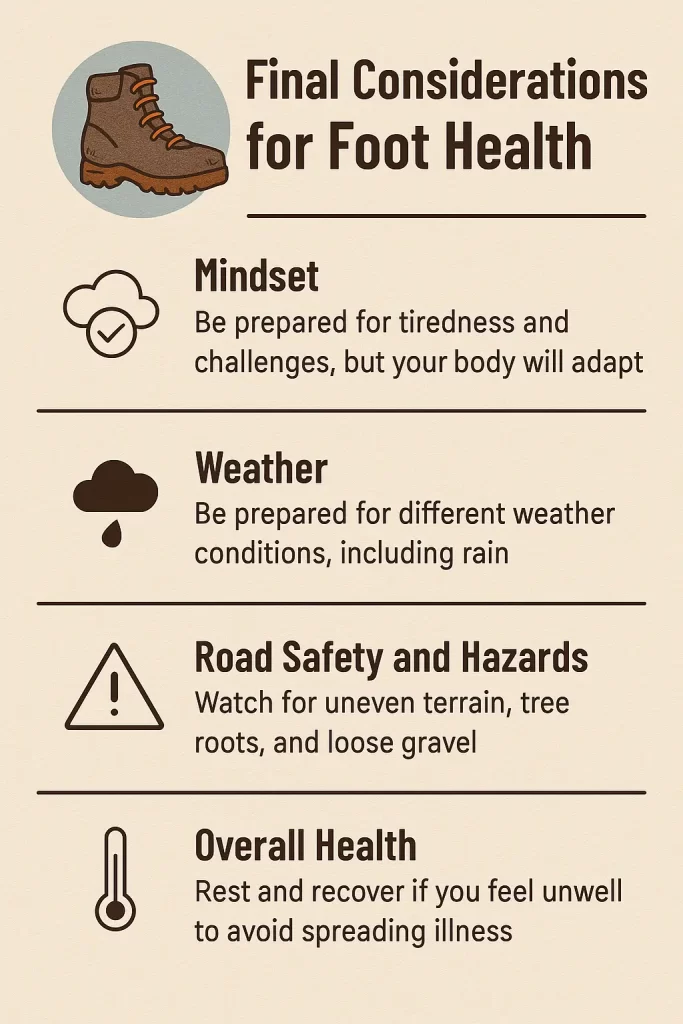
Mindset: The mental journey can be harder than the physical. Be prepared for tiredness and challenges, but also know that your body will adapt and you’ll get fitter as you walk. Don’t overthink, but have a plan and get moving.
-
Weather: Be prepared for different weather conditions, including rain, which can affect foot comfort. Quick-drying shoes and spare socks are helpful.
-
Road Safety and Hazards: Be mindful of uneven terrain, tree roots, and loose gravel, especially if walking in the dark, as a fall can end your Camino.
-
Overall Health: Colds and bugs can spread easily in communal accommodations. If you feel unwell, consider a private room and rest to recover and prevent spreading illness.
-
The Camino de Santiago is a transformative experience, and the health of your feet will significantly influence your enjoyment and success. By prioritizing prevention through proper footwear and consistent care, and being prepared to treat any issues promptly, you’ll be well-equipped to face the journey ahead.