Choosing the Best Camino Routes: A Camino Routes Guide
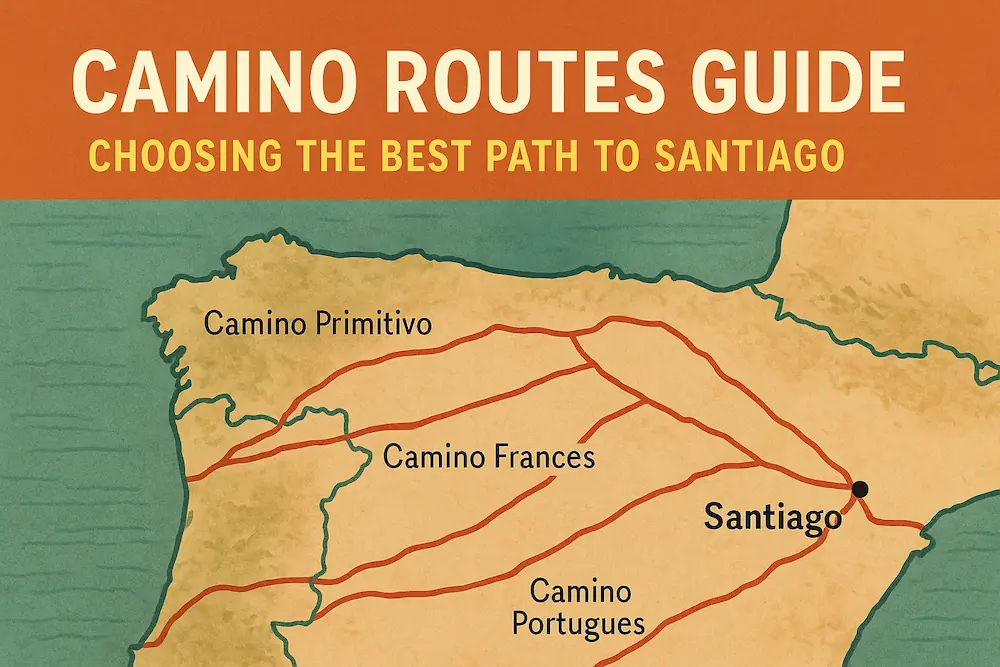
The Camino de Santiago is a renowned pilgrimage journey that draws thousands of pilgrims every year, offering a chance for spiritual reflection, personal growth, and physical challenge. What many people don’t realize is that the Camino is not a single route, but rather a collection of diverse Camino routes that lead to the Cathedral of Santiago de Compostela in Galicia, Spain. Each route has its own unique history, landscape, and charm, allowing pilgrims to tailor their journey to personal preferences and fitness levels.
This Camino routes guide will help you understand the different options, durations, and key features of the most popular paths.
The Heart of the Decision: Why Multiple Camino Routes?
The choice of Camino route is deeply personal and depends on a variety of factors. Ease of access, weather conditions, terrain type, and expected crowds are just some of the elements to consider. Some pilgrims may opt to walk the entire length of a route, while others may prefer to complete it in segments. The beauty of the Camino routes guide is the flexibility it offers—you can plan your pilgrimage based on time constraints and physical stamina.
Popular Camino Routes: A Detailed Look
Camino Frances (The French Way)
The Camino Frances is by far the most popular of all the Camino routes. Spanning 800 kilometers (485 miles) from Saint-Jean-Pied-de-Port in France to Santiago, it takes approximately 30-40 days to complete. The route offers varied terrain, including mountains, plains, and rolling hills. Pilgrims can enjoy iconic cities like Pamplona, Leon, and Burgos along the way. The last 100 kilometers, starting from Sarria, is particularly well-traveled because it qualifies pilgrims for the Compostela certificate.
Camino Portugues (The Portuguese Way)
The Camino Portugues begins in Lisbon or Porto, Portugal, and stretches 598 kilometers to Santiago. Along the way, pilgrims are treated to breathtaking coastal views, particularly the Coastal Way variant that runs along the Atlantic Ocean. The route is generally flatter and more accessible, making it a great option for those seeking a scenic yet manageable journey. The Camino routes guide recommends this path for those who enjoy coastal landscapes and a mix of urban and rural experiences.
Camino del Norte (The Northern Way)
The Camino del Norte, also known as the Ruta de la Costa, follows the northern Spanish coastline. The route spans about 466 kilometers and passes through the Basque Country, Asturias, and Cantabria. It’s a favorite for food lovers due to cities like Bilbao and San Sebastián, which are renowned for their world-class cuisine. The Camino routes guide notes that this route offers stunning ocean views but can be quite hilly, so it’s best suited for experienced pilgrims or those looking for a more challenging walk.
Camino Primitivo (The Original Way)
The Camino Primitivo is considered the first-ever Camino route, starting in Oviedo, Spain. At 315 kilometers, it’s one of the shorter routes, but it’s also among the most challenging due to its steep ascents and rugged terrain. It typically takes about 16 days to complete, and pilgrims will encounter fewer crowds compared to the more popular routes. The Camino routes guide highlights this path for those seeking solitude and a physically demanding experience.
Camino Ingles (The English Way)
Named after pilgrims who traveled from England, Ireland, and Scandinavia, the Camino Ingles is one of the shortest routes. It covers about 121 kilometers from Ferrol to Santiago, making it an excellent option for those with limited time. The route takes about 4-6 days to complete, offering a manageable and relatively peaceful pilgrimage. The Camino routes guide suggests this as a good starting point for newcomers to the Camino.
Lesser-Known but Equally Rewarding Routes
Via de la Plata (The Silver Way)
The Via de la Plata is the longest of the Camino routes, stretching over 1,000 kilometers from Seville to Santiago. While it’s less crowded than the Camino Frances, it offers its own unique charm, taking pilgrims through the historic towns of Salamanca and Zamora. The route is flatter but can get very hot in summer, so it’s best for pilgrims who are prepared for a long, slow trek. The Camino routes guide recommends this path for those seeking a quieter, more secluded pilgrimage.
Camino Finisterre (The Finisterre Way)
The Camino Finisterre begins in Santiago de Compostela and travels west toward the coast. Pilgrims walk to Cape Finisterre, a place once thought to be the end of the world. At just 90 kilometers, it’s a shorter route, typically taking 6 days to complete. The Camino routes guide mentions that this is an ideal option for those who want to extend their Camino journey or enjoy a coastal retreat.
Le Puy Camino (Via Podiensis)
The Le Puy Camino starts in central France and spans 750 kilometers. This route passes through beautiful countryside, medieval towns, and several UNESCO World Heritage Sites, offering a more scenic pilgrimage experience. The Camino routes guide highlights this route for those seeking a mix of peaceful nature and cultural experiences.
Camino de Invierno (The Winter Way)
The Camino de Invierno is an alternative route to the Camino Frances, designed to avoid harsh winter weather. This path offers a more tranquil and secluded experience, as it winds through forests, valleys, and rural landscapes. The Camino routes guide suggests it for those looking for an off-the-beaten-path experience away from the crowds.
Duration and Pace: Tailoring Your Camino Journey
The beauty of the Camino routes guide is that it allows pilgrims to select a journey that fits their timeline and physical stamina. While some routes like the Camino Frances require several weeks to complete, others like the Camino Ingles can be done in just a few days. Many pilgrims break their journey into sections, allowing them to explore the Camino routes at a comfortable pace.
It’s important to listen to your body, pace yourself, and take breaks as needed. The Camino is not a race, and many people find that shorter walking days or rest days help them to enjoy the experience more fully.
The Camino Spirit: More Than Just the Miles
The Camino de Santiago is about more than just walking—it’s about the community, the shared experience, and the personal growth that comes with the journey. Pilgrims, or “peregrinos,” often start alone but find themselves forming meaningful connections with others along the way. This sense of camaraderie is a central part of the Camino experience.
Regardless of which Camino route you choose, the journey offers a profound opportunity for self-discovery and introspection. Many pilgrims leave with new perspectives on life, a sense of spiritual fulfillment, and lasting memories of the Camino community.
Making Your Choice and Preparing for the Journey
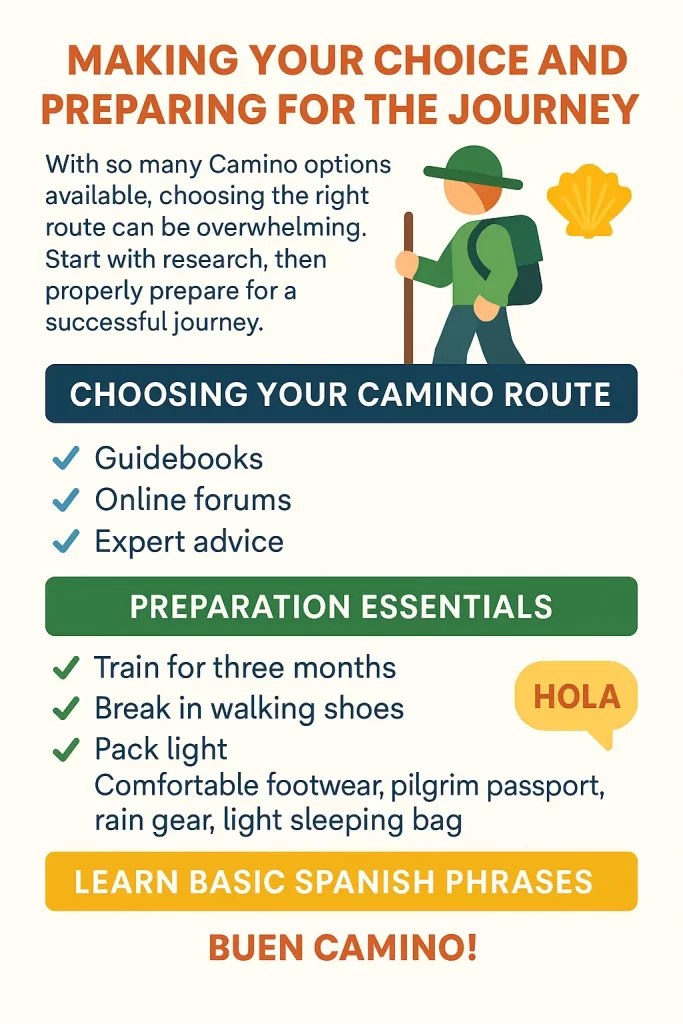
With so many Camino options available, choosing the right route can be overwhelming. This Camino routes guide suggests starting with research and consulting guidebooks, online forums, and expert advice. Once you’ve chosen your route, proper preparation is essential to ensure a successful journey.
Train for at least three months in advance, break in your walking shoes, and make sure to pack light. Essential items include comfortable footwear, a pilgrim passport, rain gear, and a light sleeping bag. Don’t forget basic Spanish phrases, as they’ll be helpful when communicating with locals.
Conclusion: Buen Camino!
The Camino de Santiago is a deeply personal journey that offers a unique opportunity for growth, reflection, and connection with others. Whether you’re walking for spiritual reasons or simply to disconnect from everyday life, the Camino routes guide ensures that you can select the right path to meet your goals. Start planning your Camino pilgrimage today, and experience the transformative journey that thousands have embarked upon for centuries.
Buen Camino!